
زبان
The constitution of Language

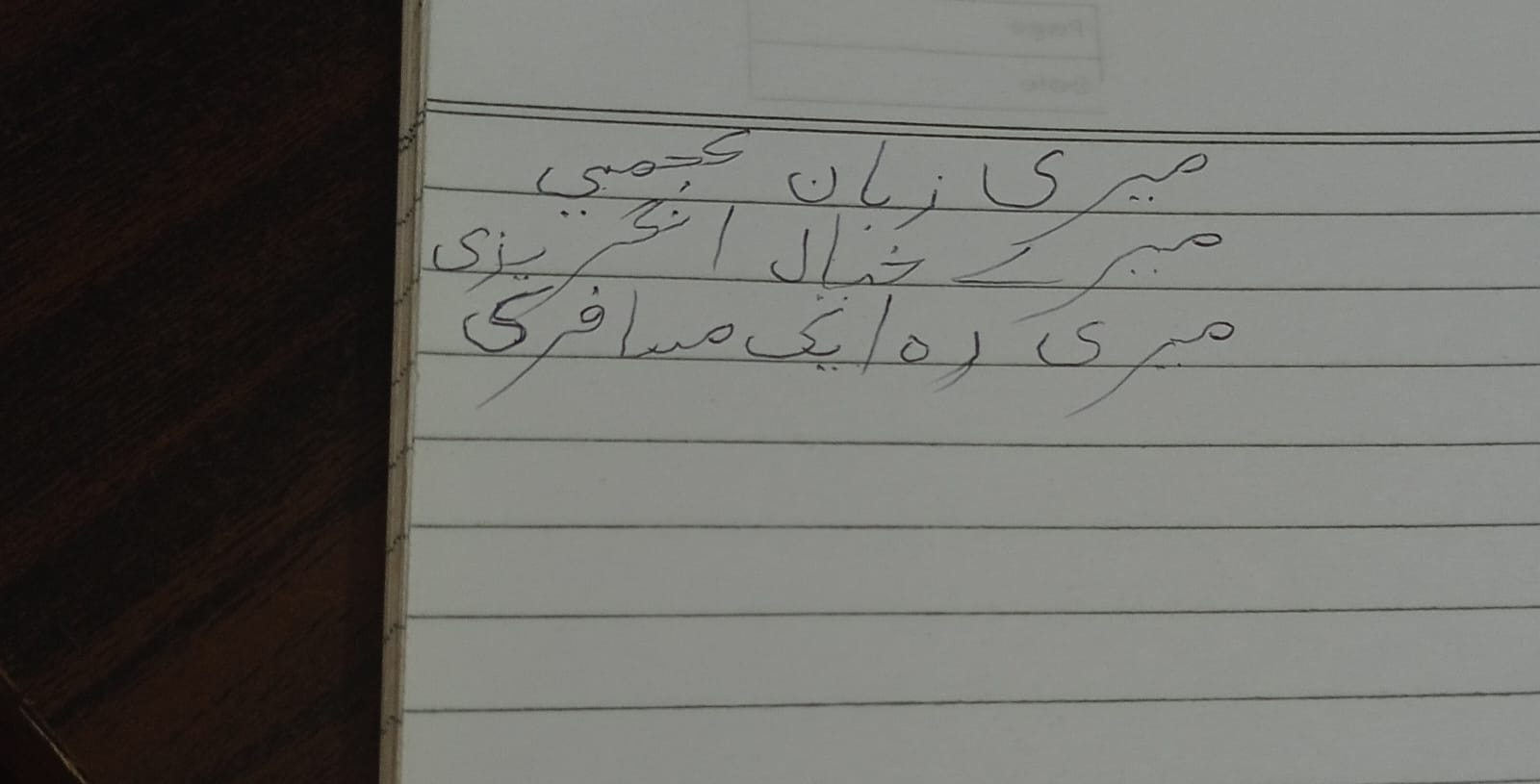
Some things I learned from my first Urdu Lecture-
“Zabaan Awaazo ka majmua hai.” The tongue is the mixture of sounds. Banded together to create comprehension. Tongue depends on the cultural and geography of a region. So a language is also influenced by the region, time and culture.
“Zabaan” is used to shape thought and teach the younger generation, or anyone who comes in contact with the language, exampli gratis, The Britishers call the coup of 1857 as the “Rebellion of 1857.” and we call it the “ The first freedom war”
My hand shot up and I asked “Why do the Britishers use the word “Bagawat” of 1857? It implies that we were trying to usurp or we were the ones who betrayed the rule or the country. My Prof. smiled.
Its like saying “The west didnt prosper because of it’s ideas of democracy or by preaching the superiority of the ideals which it fails to hold itself by, it prospered by its ability to use Organised Violence.”
My Prof. asked us “What’s the use of Grammar?” I answered “To understand the Laws of the Language.” (The irony was that i answered in Urdu.) He asked me if ive ever studied Grammar or Known the Qawayyid of Urdu. I answered negatively, to which he asked me logically how could i speak in urdu if i dont know the Qawayyid. I didnt speak anything.
He looked at us and said the First book of Grammatica for Urdu was written by A German. He told us that a Persian,Sebaweyh, wrote the First comprehensive Grammar of Arabic. Arabs were/ are very proud of their language and the purity of it. They called the Persian Grammarian “Ajmi” which means one who can’t speak. The word Arab means one who can speak. For them, anyone outside of Arabia who isn’t native and can’t speak Arabic is an Ajmi.
He looked at us, and said “ Now you know what constitutes a Language, the frailty, the strength of it, Now you’re ready to learn Qawayyid.”
He asked me “Why do i want to learn Urdu?”
I told him because My Mother, My Ammi, My Noor, My Zindagi, My duniya, loves it. I never really learned urdu and i regret it now. My mother has bachelors in Urdu, and she taught me a poem by Rahi Masoom Raza(For 4 years, i thought it was Faiz Ahmed Faiz ;((( ). Which is “Sheesho ka Maseeha Koi nhi”
Translates to “The Glass has no savior”
Sheesha hai ki Jaam ki door
Jo toot gya, So chooth Gya,
Tum nahak Tukre chun chun ke,
Daman me Chupaiya Baithe ho,
Sheesho ka Maseeha koi nahi,
Kya aas Lagaye baithe ho?
Below is the correct poem, the above is how i remember it-
motī ho ki shīsha jaam ki dur
jo TuuT gayā so TuuT gayā
kab ashkoñ se juḌ saktā hai
jo TuuT gayā so chhūT gayā
tum nāhaq TukḌe chun chun kar
dāman meñ chhupā.e baiThe ho
shīshoñ kā masīhā koī nahīñ
kyā aas lagā.e baiThe ho
Translation:
Be it a pearl, or a glass, a goblet or a gem, What is shattered is gone for good.
Can it ever be joined by weeping? What is broken is completely freed.
You vainly pick up piece after piece, And sit, concealing them within your skirt.
There is no Messiah for broken mirrors— What great expectation do you cling to?
Peace.
Translation is an act of Betrayal. Now i get it.
Translation is a betrayal. A betrayal to depth, really. This touched my heart, loved this post sm!
Damn Saaim, you did it again